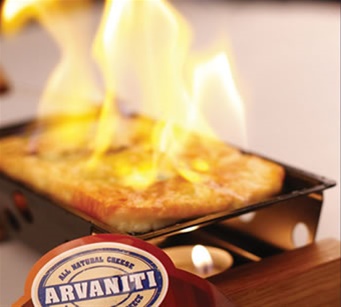
We usually use the word Saganaki to describe the Greek way of cooking the dish in the pan, that is the origin of the cheese name. We used to cook only kefalotyri cheese, but in the 90’s we started using other cheeses as well. Today we often use hard cheeses, such as kefalotyri, kasseri and graviera, but some times we use softer ones, such as feta and manouri.
There are several versions of saganaki in different locations. In Greek restaurants the classic saganaki is cooked with kefalotyri, but we can also see cooks suggest other cheese as well, such as feta, manouri, graviera, smoked cheese, gais cheese and others. Outside of Greece we meet some other versions. For example in Greek restaurants of Germany they use the fetabreaded, while in Greek restaurants in Chicago they use kasseri that flame it with ouzo and when the fire shows they shout “opa”, in other contemporary versions we see using manouri.
In mid 80s in Fromagerie Arvaniti we formed a special cheese with the name Saganaki for first time. The idea came at the packing facilities of the dairy. There was a heated point at the gratting machine where we used to place pieces of kefalotyri and then eat them soft and warm. That was the spark to work and develop that cheese.
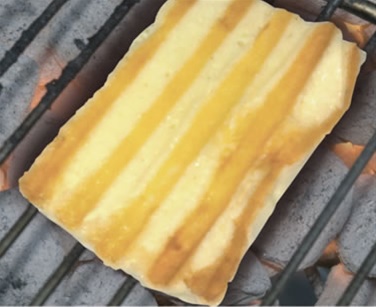
Some times the kefalotyri used to melt while cooking. What we did? We produced kefalotyri with less moisture and cut it square so the slices would be equal thick to be cooked evenly. Also, the saganaki cheese could be grilled without melting down. Very useful and tasty cheese for barbeque.
The birth of that cheese is considered success, since ever since there were many company that imitated that cheese and called it saganaki. Be aware when you cheese a saganaki cheese to be made of fresh milk, like Arvanitis Saganaki, and no bad imitation (either processed or different type of cheeses) of it that we see often in some super markets. In the taste you can always tell a good cheese.