

Greece is the most populous in Europe in number of goats. 3.8 million goats live in the country. This corresponds to 31% of the goat population throughout Europe and puts us in the first place with a difference from Spain and France that follow.
[Source: Eurostat]
Every year in Greece about 140 thousand tons of goat milk are produced. Almost all of them are intended for cheese-making. Our country has the largest milk production in Europe.
[Source: ELGO-Dimitra]
The only ingredient in Goat cheese is the local fresh milk. To produce Goat cheese we use rennet and salt. Everything else is the craftsmanship and experience of the cheesemaker in order to achieve the best taste!
Goat cheese is ideal for young children. Teach your kids the taste of a cheese that is healthier than alternative cows. Put goat cheese in their daily diet to enjoy cheeses with the most nutrients.
Goat cheese benefits digestion. Goat’s milk, and therefore goat’s cheese, is more easily broken down by the digestive system than cow’s milk. This is due to its different protein structure from beef and has less lactose. Much of the world’s population has difficulty digesting lactose, suffering from symptoms such as bloating, abdominal pain, gas and diarrhea.
Goat cheese is filling! Goat cheeses have been shown to reduce the feeling of hunger. Their fatty acids are digested faster, providing an immediate source of energy and thus increase the feeling of satiety in the human body.
The nutrients and minerals contained in goat cheeses are better absorbed than the other cheeses. Many researchers recommend that people with nutrient absorption problems, anemia and osteoporosis consume goat’s dairy products regularly.
Goat cheeses beautify us! Goat cheeses have high levels of vitamin A, which contributes to the health of human skin, improves the skin and helps fight acne. Also, the lactic acid found in goat’s milk helps to remove dead cells and gives radiant skin.
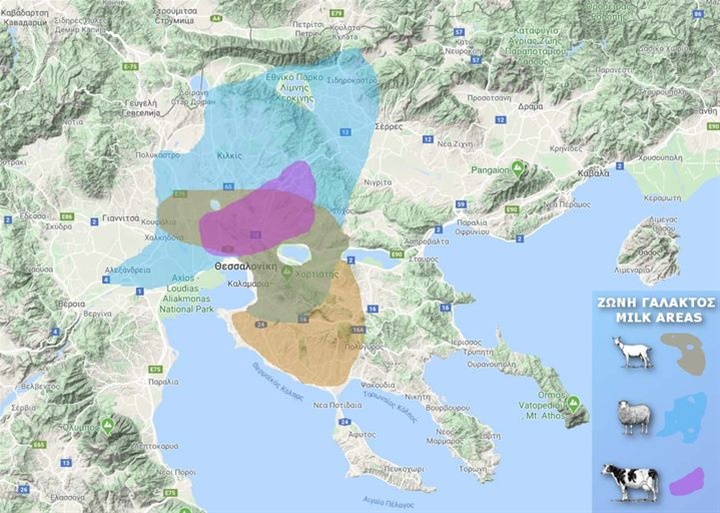
In Macedonia, the real one, 30% of the goat milk of Greece is produced, in more than 3000 farms. In particular, the region of Central Macedonia is the region with the most goat milk in Greece.
[Source: ELGO-Dimitra]
Goat cheese is usually harder than Feta. This is due to the structure of the milk during cheese making. Although the hardness is controlled in the early stages of maturation, the goat’s milk with its lower fat produces a little harder cheese than the sheep’s milk in Feta.
Myth: goat cheese smells. Goat’s milk and consequently cheese has its character, a subtle delicate taste. The cheeses that have a strong smell are mainly the French goat cheeses and this is due to the way they are matured with fungi.
Goat Cheese ARVANITI is produced by a similar method as Feta PDO, except that only goat milk is used. We collect milk daily from about 300 selected producers within a radius of up to 70 kilometers and we cheese it with fresh milk to maintain the taste as much as possible.
With a maturity of five months, goat cheese reaches the peak of its taste. When produced, it is placed in brine, where it matures at a controlled temperature for a certain period of time in order to develop the richest possible taste and the best texture.
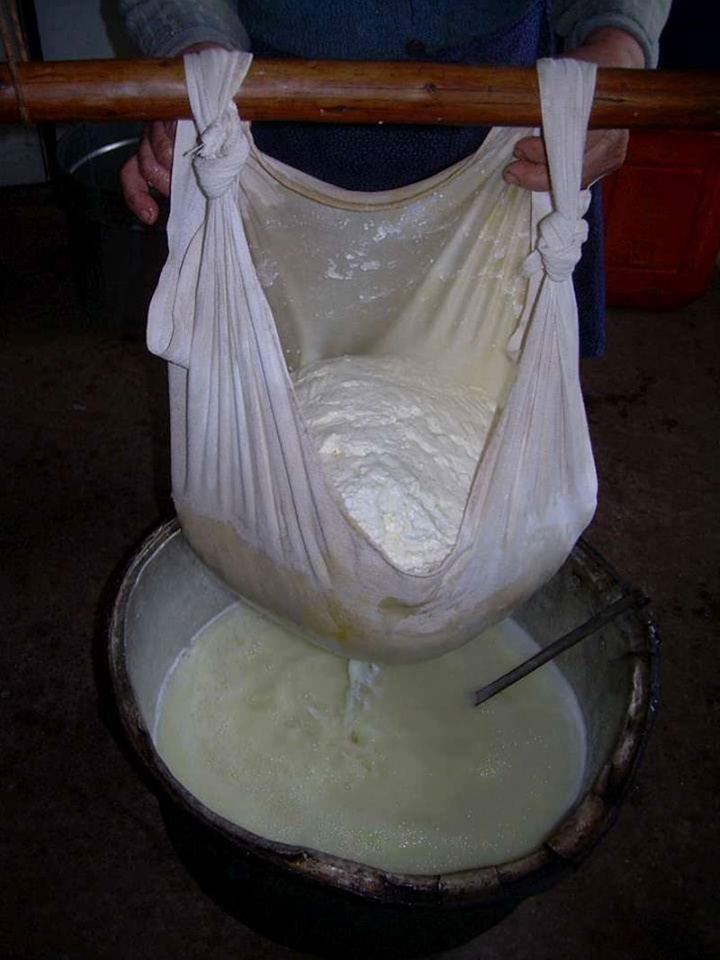
What is a Tsantila? In the Greek language, one concept is “irritability”, but the one we are interested in is the cotton cloth where we drain the cheese. The same fabric is found with other names, such as tulpan.
The Tsantila Goat Cheese gets its name from the bag we use to drain the cheese. This slow process in which we let the cheese drain for at least 24 hours in the clothe, where drainage is best done, gives us a traditional (irregular) surface in the cheese.
Goat’s milk is produced mainly in spring, culminating in April and May. Much of the cheese is produced during that time and then matured and stored in refrigerators for consumption throughout the year.
To produce one kilo of cheese, you need about 6 kilos of milk, thus multiplying the nutrients of milk in consumption.
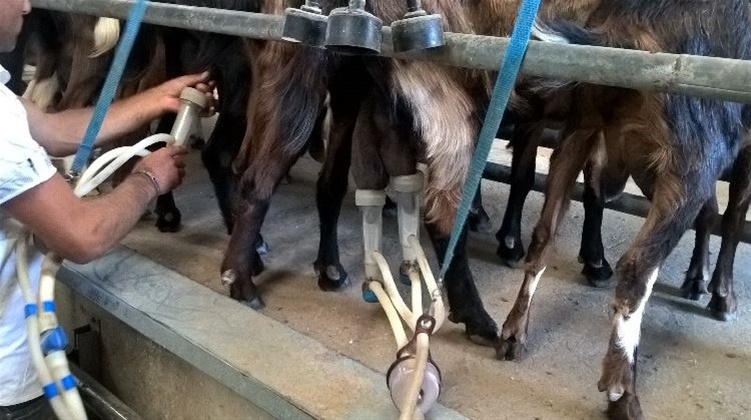
Each goat is milked twice a day and produces an average of 1 kg in each milking.
Amalthea was the goat that fed Zeus with her milk when she was an infant. Its name means in Greek: generosity/abundance, and emphasizes the nutritional value of goat’s milk.